
Five Challenges Facing Product Marketing in 2026
This is part one of a two-part blog series. In this blog, we’ll discuss common challenges product marketers are seeing today. In part two, we’ll discuss strategies for adapting to these challenges.
Introduction
Recently, I’ve seen a lot of discussion about the state of product marketing. Many PMMs feel the function isn’t clearly understood or valued. They fear AI could replace them. Even those with job security say the role is changing fast — and that it no longer looks like the PMM of yore.
This post is for product marketers, PMM leaders, and executives in B2B tech. If you've felt your role is unclear, under-resourced, or under pressure from AI, you're not alone. In this post, we’ll explore five ways product marketing is changing, and the timeless strategies that can help you through every evolution.
What’s Driving Challenges in Product Marketing
Before we dive into the five challenges, it is important to understand two key background factors:
Layoffs and hiring reductions
Increased AI adoption
According to recent research from Wynter, 47% of B2B companies have eliminated marketing roles because of AI. 26% of study participants named PMM as a function most at risk of being eliminated.
In their State of Product Marketing 2026 report, the Product Marketing Alliance (PMA) revealed that over 80% of surveyed PMMs use some type of AI on a regular basis, with nearly 89% reporting a noticeably positive impact on productivity.
While this reads as good news, it highlights the potential risk of AI replacing humans for key product marketing responsibilities. In the PMA report, 83% stated that they use AI for what many consider to be the bread and butter work of product marketing — messaging and positioning. This is one example of a shift that is taking place in real time.
Together, economic and technological shifts have created unprecedented challenges for product marketers in terms of job security and day-to-day workloads. Successful PMMs in 2026 and beyond will need new strategies to adapt.
Five Challenges Product Marketers Face in 2026
PMM Role Clarity is Fragmented
The PMM role has never been especially uniform across companies. For example, I was told once during a job interview that there were two types of successful PMMs at that particular company – one either could hyperfocus on content or get deeply involved with product strategy. The implication was that generalists typically didn’t go very far.
In my experience, product marketing has looked different at every company I’ve worked in. Some push a more generalist approach; others lean heavily on strategy. Others emphasize collecting the voice of the customer.
There is no singular right approach. Product marketing needs differ based on many factors, including team headcount, how the product is used, and whether supporting functions exist in product management, marketing, customer success, and sales enablement.
However, the resulting challenge is a lack of standardization across the product marketing ecosystem. This makes it harder for product marketing to articulate its value and define a universal standard of what good looks like.
As a result, PMM job descriptions and measures of success vary wildly among companies. Often, this reflects pressing priorities at the time of hire, which can give rise to a role that never truly appears defined. PMM roles end up being amorphous by nature.
And now, whatever clarity there seems to be may be decreasing. According to PMA’s State of Product Marketing 2026 Report, 37% of respondents rated “internal understanding and support for product marketing” as either a 1 or 2 on a 5-point scale (with 5 representing perfect understanding).
This is a concerning signal for what is supposed to be a maturing function and creates friction for current PMMs and jobseekers alike.
There are many reasons for this lack of clarity. Each of our remaining challenges will explore a key reason in detail.
Departmental Expectations Vary Widely
A lack of role clarity doesn’t solely originate from the lack of industry standards. It also rises from the multidisciplinary nature of product marketing. Within companies, other departments see product marketing through the lens of its needs. The diagram below shows an example of how this might look.
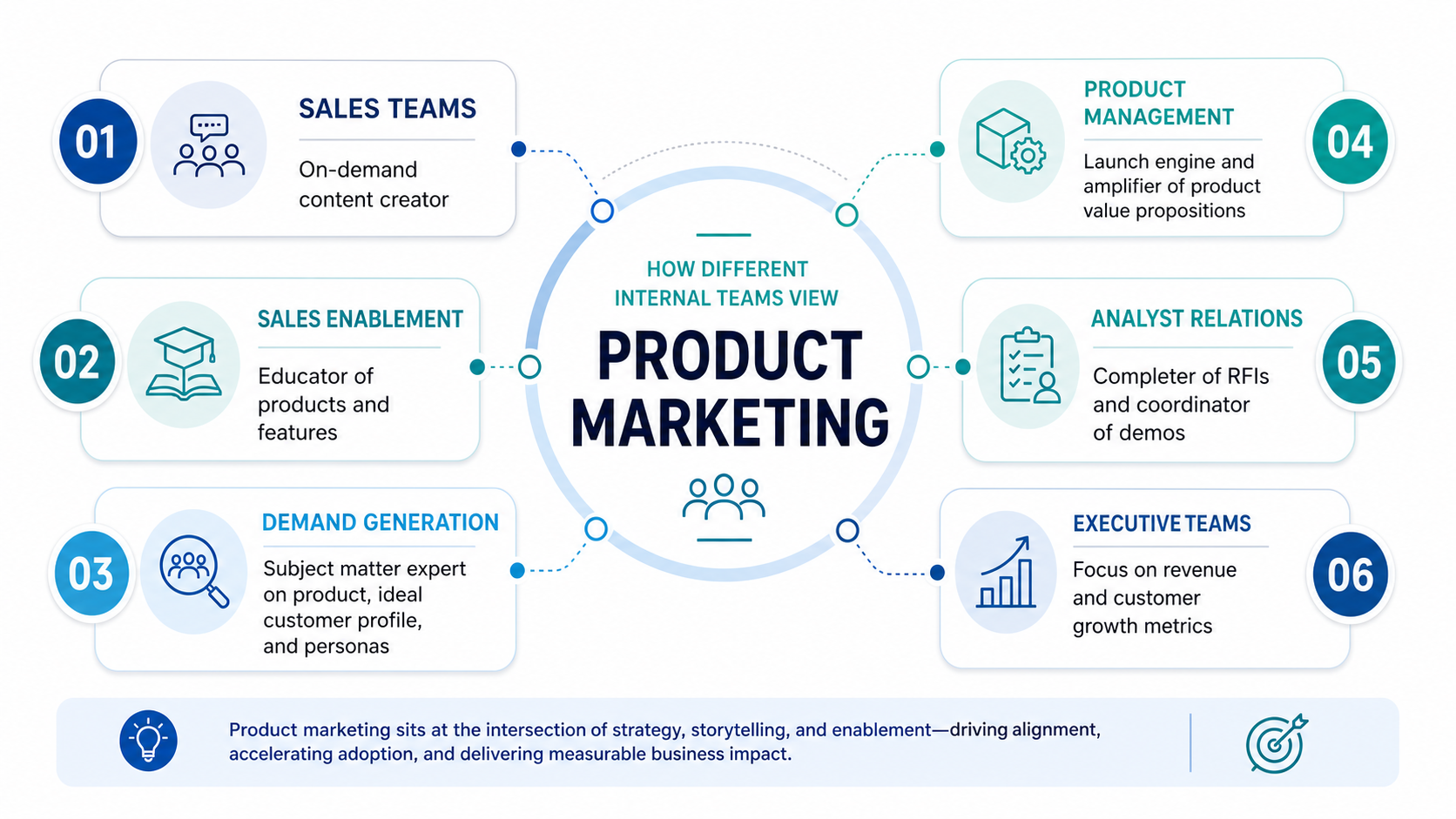
Figure 1. An example of how different teams might view product marketing through the lens of their own needs.
This may look different depending on the size and maturity of the product marketing and overall marketing teams. This reflects many experiences I’ve had working on marketing teams in small and mid-sized companies.
There’s nothing inherently wrong with each department needing different things from product marketing. Product marketing roles are meant to be cross-functional. However, executive leadership should strive to clearly align KPIs and incentives around the most important product marketing activities — and communicate this charter clearly across all stakeholder groups.
Without prioritization and focus, it becomes harder for product marketers to establish their value. This leads to potential frustration and burnout.
In a perfect world, product marketing is given the time and tools to achieve its far-reaching goals, which brings us to the next challenge.
Product Marketers Are Asked to Do More with Less
A combination of AI promise and unpredictable economic conditions is leaving many product marketers feeling as though they are asked to accomplish more with fewer resources. Whether it’s related to team size, ability to hire contractors, approvals for software licenses, or budgets for executing campaigns, many product marketers today feel the effects of corporate belt-tightening.
According to PMA’s State of Product Marketing 2026, around 80% of product marketers surveyed report being on a team of five or fewer, despite the fact that over half of product marketers support four or more products. As teams contract and AI expedites certain workflows, many PMMs see their list of responsibilities growing.
However, the report also shows an increase in the percentage of resources devoted to software tools for PMMs. Increased software expenditures may be the result of reduced salary costs.
But even with more software spending, many PMMs still feel the pinch. Some firms are forgoing investments in purpose-built software for needs such as demos, competitive intelligence, and market analysis in the hopes that LLMs can do just as good of a job. In my view, this is yet to be proven.
Of course, product marketers are a resilient bunch. They consistently figure out how to use their knowledge and on-hand resources to maintain a high standard of output. With resource allocation shifting to AI tools, many product marketers are standing out as early power users of different engines and workflows.
This is a double-edged sword. While product marketers rise to the challenge, their resource allocation may be further threatened. This creates a potential for a race-to-the-bottom as a department that touches so much of the organization should be allowed sufficient resources to carry out its mission at the highest level.
The best way to make the case for budgets and tooling is to be able to show impact and prove business hypotheses through data. This brings us to our next challenge.
Data is Hidden and Metrics Aren’t Standardized
The cross-functional nature of product marketing means that relevant KPIs may live in many different places. While many companies strive to unify data access, the fact remains that business metrics are often siloed among multiple platforms, even within one department.
The chart below shows an example of a product marketing analytics software stack and the different departments where critical tools may live.
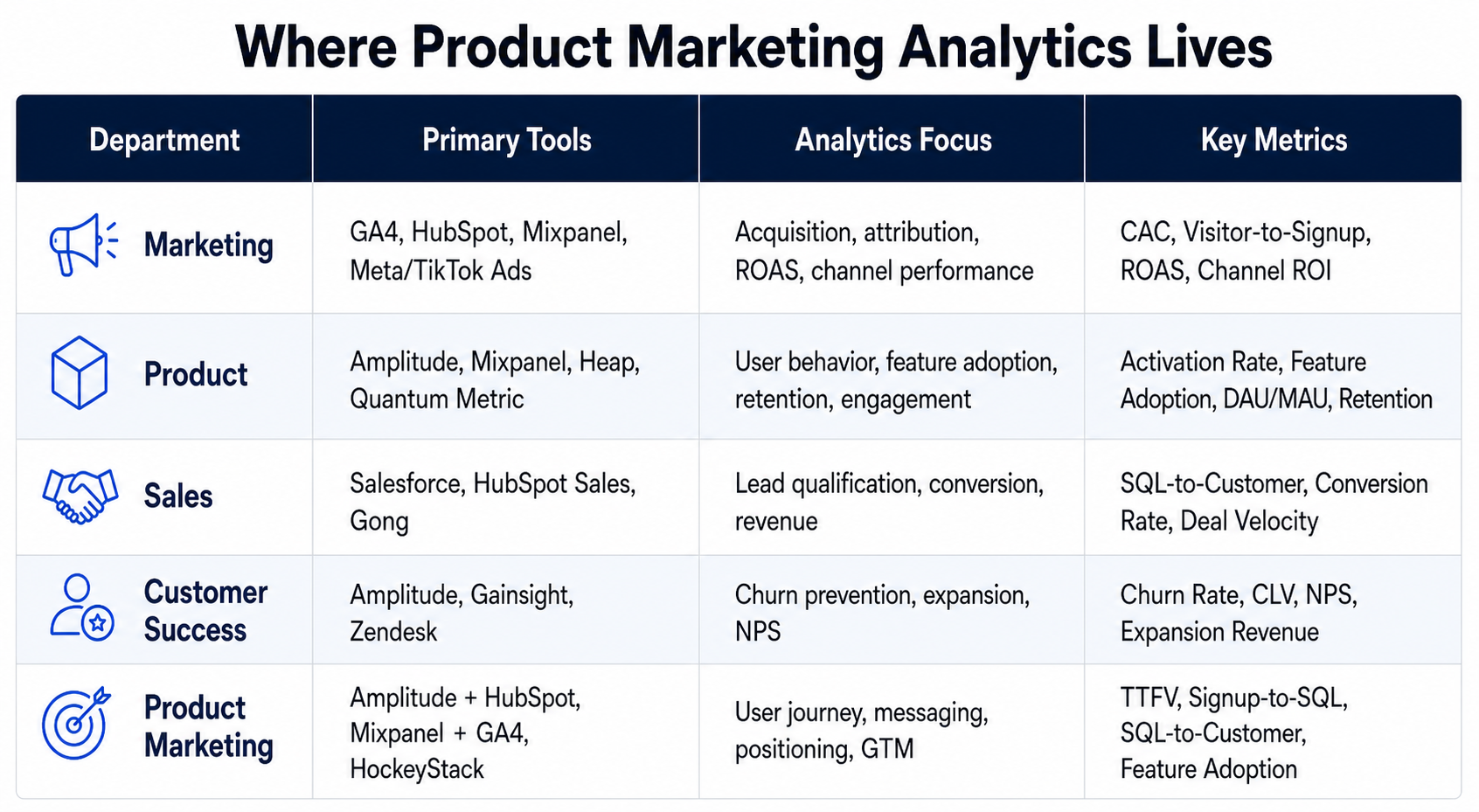
Figure 2: Product marketing analytics lives across Marketing, Product, Sales, and Customer Success tools, creating data silos.
While larger and more digitally mature organizations may build a unified data infrastructure to consolidate access to key metrics, many product marketers spend extra time searching for data and collating sources.
This creates the potential for reporting gaps, where product marketing struggles to validate its efforts and prove business value. In an era where product marketing is increasingly asked to justify its existence, these gaps create real pain.
AI holds potential for making this data not only more accessible but can expedite needed analyses. However, when it comes to AI, many companies are still figuring out how to separate the signal from the noise, which brings us to our final challenge.
AI Opportunities Are Masked By AI Distractions
Product marketers are accelerating myriad workflows with AI. From content writing to competitive battlecard creation to synthesizing multiple research sources, AI is supposed to eliminate handoffs and bottlenecks that keep product marketers feeling under the gun to meet business needs in time.
The promise has been heard. According to the PMA survey, 82% of respondents regularly use AI tools as of 2026. This is the first year that this has been measured in the report, indicating a rapid adoption curve. While there are few statistics about productivity gains specific to product marketing, data collected on general marketing productivity gains makes clear the reasons behind the enthusiasm. Some examples:
AI use enables companies to publish 42% more content each month (Ahrefs)
43% of marketing professionals automate repetitive tasks and processes with AI software (SurveyMonkey)
41% analyze data for insights with AI tools (SurveyMonkey)
AI saves marketers 13 hours per week in daily tasks (ActiveCampaign)
But these productivity gains are often threatened and sometimes even erased by AI distractions. Unsurprisingly, IAB reports that 70% of marketers have already encountered an “AI Incident” that includes hallucination, off-brand content, or bias.
Anyone who has used AI consistently in production has probably encountered at least some degree of this. In some of my earliest forays into AI-assisted content creation, I ran into many hallucinations sneakily woven into otherwise solid content. The resulting rework meant I didn’t save much, if any, time or effort.
Errors and hallucinations aren’t the only distractions. Many firms are still figuring out AI governance. As it stands, there are substantial risks including IP infringement, data privacy and security, non-compliant content, and algorithmic bias, just to name a few.
Product marketers must take the time to understand the risks and governance structures of their tools of choice, or they’ll run the risk of spending a lot of time and money on damage control. The image below provides a basic checklist for getting started with AI governance as a PMM.
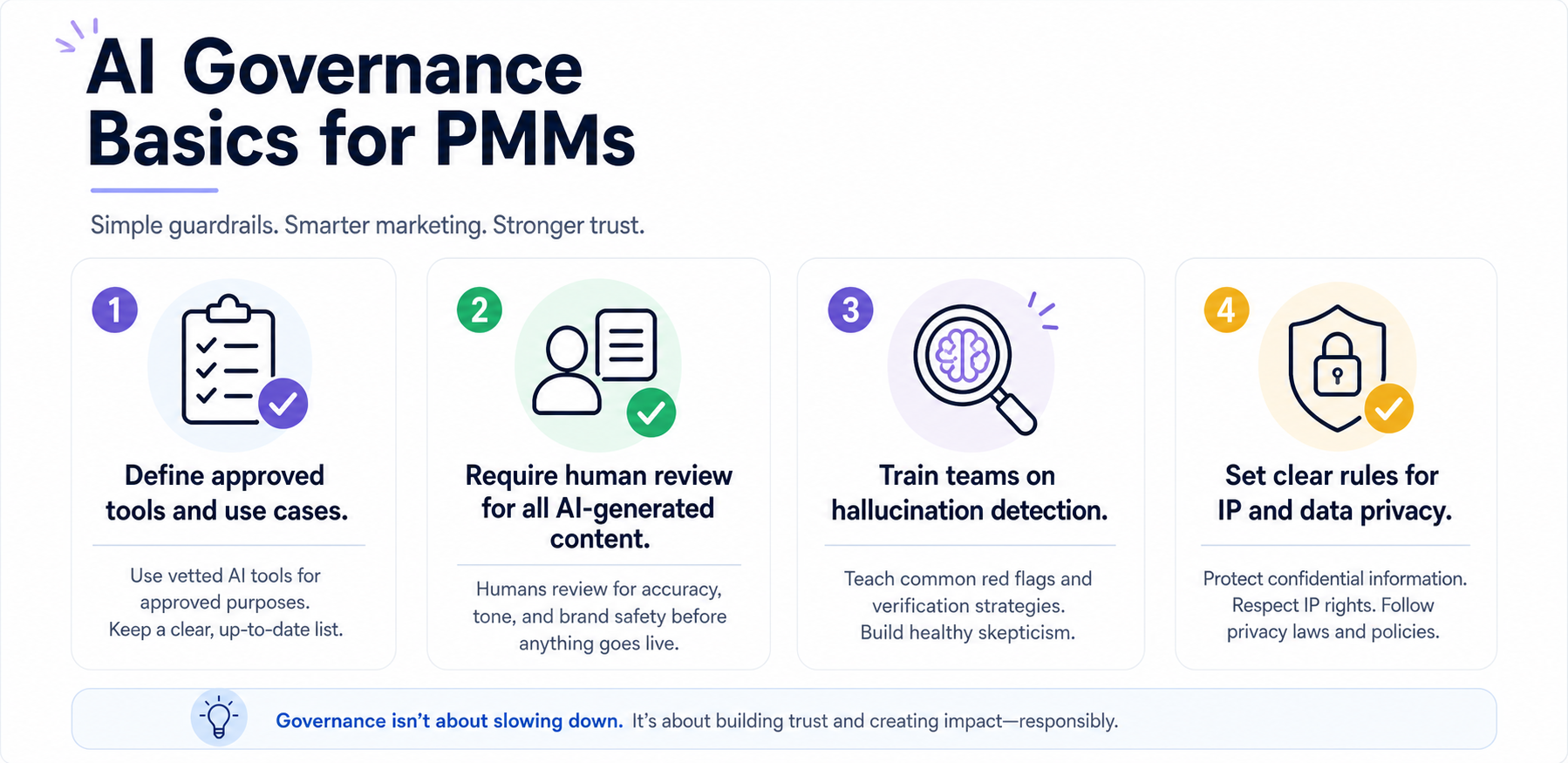
Figure 3. Checklist for PMMs getting started with AI governance.
Conclusion: A Faster Paced PMM Role with AI Amplification
The product marketing function is evolving faster than ever. In 2026, PMMs are navigating fragmented role clarity, shifting departmental expectations, tighter budgets, siloed data, and the double-edged promise of AI. These challenges aren’t signs that product marketing is failing; they’re signals that the role is maturing under new economic and technological pressures.
The PMMs who thrive in this environment will be the ones who build strong cross-functional relationships, stay close to customers and data, and remain flexible enough to evolve with the role. They’ll treat AI as a tool to amplify their work, not replace it. And they’ll use data to tell a clearer story about how product marketing drives real business outcomes.
In part two, we’ll walk through actionable strategies to adapt to each of these challenges and keep pace with the rapid pace of change in product marketing.
If you’re a product marketer, PMM leader, or executive feeling the pressure of unclear expectations, stretched resources, or AI-driven change, Greenefield can help.
Greenefield Consulting partners with innovative companies to:
Clarify the goals and KPIs of Product Marketing
Build messaging and positioning frameworks that connect product value to customer needs
Design content and thought leadership strategies that drive engagement and revenue
Whether you need a one-time positioning audit, a full product marketing strategy, or ongoing content and messaging support, we can help you build a PMM function that’s clear, credible, and resilient.
Reach out to discuss your product marketing needs:
👉 Contact Greenefield Consulting to set up a conversation.
